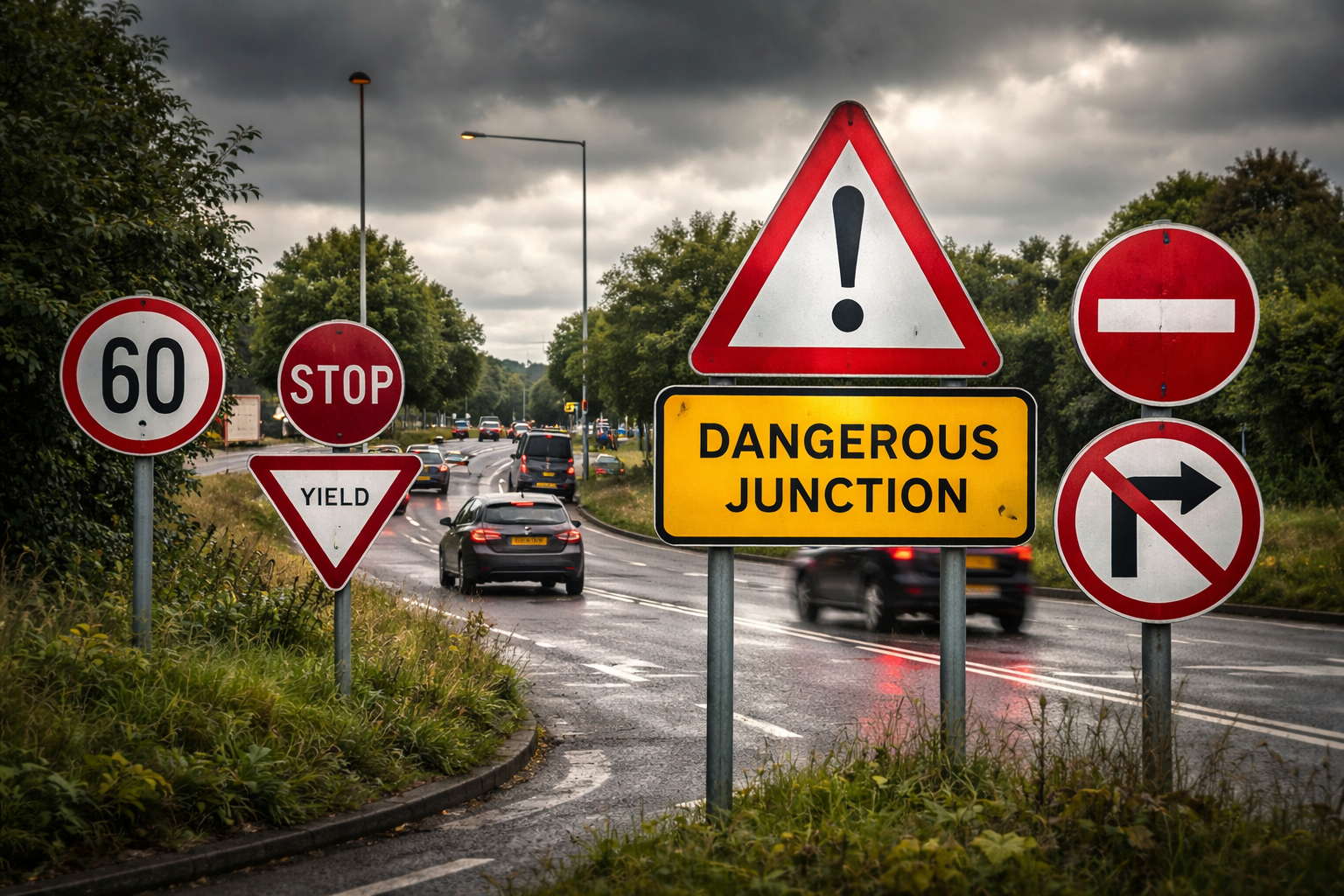
Nearly 25% of Irish learner drivers fail their first attempt at the RSA theory test. But failing isn't random—it's predictable. Certain categories trip up learners far more often than others, revealing where study time needs to focus. This article breaks down the 8 RSA theory test topics by actual fail rates and gives you specific, actionable tips to master each one.
Why So Many Learners Fail the RSA Theory Test
The RSA theory test is comprehensive. You're asked 40 questions across 8 different categories covering 805 total questions. The test uses random selection, which means some attempts will draw more questions from harder topics. But that's only part of the story.
The real reason learners fail isn't bad luck—it's incomplete preparation. Most learners focus on whichever topics feel easiest rather than tackling the genuinely difficult ones. They memorise easy traffic signs and rules but gloss over Vulnerable Road Users or First Aid where precision matters.
RSA Theory Test Category Fail Rates (2026)
Estimated fail rate % when candidates are tested primarily in each category. Data reflects typical learner performance patterns.
1. Vulnerable Road Users
38% FailWhy It's Hard
This category tests your awareness of cyclists, pedestrians, motorcyclists, and other vulnerable road users. It requires knowing specific regulations and clearances rather than general road sense.
Common Mistakes
- Guessing at the exact clearance distance when passing cyclists (1 metre at speeds under 50 kph, 1.5 metres above 50 kph)
- Confusing rules for zebra crossings vs. other pedestrian crossings
- Not knowing when you must give way to cyclists entering from the right at roundabouts
- Missing school zone speed restrictions and how they differ from normal zones
3 Study Tips
- Memorise the exact numbers: 1m clearance under 50 kph, 1.5m above 50 kph. Drill these figures daily until they're automatic.
- Practice on real roads: Next time you drive, deliberately notice cyclist positions and practice spotting vulnerable road users. This helps cement the real-world context.
- Use DTT Ireland's "Vulnerable Road Users" filter: Focus your study sessions on just this category using the app's Smart Study mode. Spaced repetition will embed the rules.
2. Vehicle Safety
35% FailWhy It's Hard
Vehicle safety questions are highly technical. They test your knowledge of tyre tread depth, brake light requirements, load securing, mirrors, and pre-journey safety checks. These aren't intuitive—they require specific facts.
Common Mistakes
- Forgetting the legal minimum tyre tread depth (1.6mm across the central three-quarters of the tyre)
- Confusing brake light rules with fog light rules
- Not knowing how to secure loads safely (cross-straps, edge protection, securing from shifting)
- Misremembering mirror adjustment angles and positions
3 Study Tips
- Create a physical checklist: Write down tyre tread depth, brake light specs, and load rules on a card. Review it for 2 minutes daily.
- Inspect a real car: Walk around a vehicle and check each safety component. This visual memory anchors the facts better than reading alone.
- Use DTT's "Vehicle Safety" focus mode: The app's Smart Study prioritises this category based on your weak areas, so spaced repetition targets your gaps.
3. First Aid
32% FailWhy It's Hard
First Aid questions test your knowledge of what to do at a crash scene, how to help injured people, and when NOT to move someone. The stakes feel high, which makes learners anxious and less focused.
Common Mistakes
- Moving an injured person when you shouldn't (risk of spinal injury)
- Confusing the recovery position with CPR position
- Not knowing whether to remove a motorcycle helmet (you shouldn't, unless it blocks airway)
- Forgetting to turn off the engine at the crash scene or make the area safe
3 Study Tips
- Follow the acronym method: Learn DRABCD (Danger, Response, Airway, Breathing, CPR, Defibrillation) and practise saying it aloud. Mnemonics stick better than lists.
- Watch a short first aid video: The HSE and Irish Red Cross have YouTube videos showing recovery position and crash scene procedures. Visual learning helps for practical skills.
- Take a real first aid course: A 2-hour course isn't just for passing the test—it could save a life. Many workplaces offer free training.
4. Driver Attitudes
29% FailWhy It's Hard
Driver Attitudes tests your understanding of legal limits and penalties for drink driving, drug driving, and mobile phone use. The specific BAC limits and penalties change, causing confusion.
Common Mistakes
- Confusing the BAC limit for learner drivers (0.02%) with ordinary licence holders (0.05%)
- Forgetting that the mobile phone ban applies even at red lights
- Not knowing the penalty for mobile phone use (€250 fine and penalty points)
- Underestimating how quickly you become impaired (even 1-2 drinks can slow reaction time)
3 Study Tips
- Memorise the BAC table: Learner drivers: 0.02%. Ordinary licence: 0.05%. Young drivers (17-23): varies—check the 2026 rules. Write it down three times daily.
- Learn the penalties: Mobile phone use: €250 fine. Drink driving: €200–€1,000 fine plus disqualification. These are memorable when paired with the behaviour.
- Use DTT Ireland's "Driver Attitudes" filter: The app's Smart Study mode surfaces this category regularly, reinforcing the specific figures and penalties.
5. Environment
26% FailWhy It's Hard
Environment questions cover eco-driving, fuel efficiency, emissions, and the environmental impact of driving practices. These feel less urgent than safety rules, so learners deprioritise them.
Common Mistakes
- Not knowing how underinflated tyres increase fuel consumption (and emissions)
- Confusing efficient speeds for fuel economy (typically 100–110 kph on motorways)
- Forgetting that idling for more than 10 seconds wastes more fuel than restarting the engine
- Not understanding how aggressive acceleration increases emissions
3 Study Tips
- Link environment questions to practical savings: Lower fuel use = lower cost. This personal benefit helps you remember the rules.
- Understand the "why" not just the "what": Tyres lose 1% pressure per week; underinflated tyres increase rolling resistance, needing more fuel. This logic sticks better than memorisation.
- Use DTT Ireland's eco-driving tips: The app includes a "Green Driving" section with practical advice on reducing your environmental footprint.
6. Safe Driving
22% FailWhy It's Hard
Safe Driving covers following distance, night driving, fog, motorway rules, and reversing procedures. It's a broad category with many specific rules.
Common Mistakes
- Not knowing the 2-second rule for following distance (at least 2 seconds behind the car ahead)
- Forgetting which lights to use in fog (full beams don't work in fog; use dipped beams and fog lights)
- Confusing motorway rules (no learner drivers allowed on motorways with a provisional/learner licence and no adult supervision)
- Not understanding when to use hazard lights (at low speed on motorways, or broken down)
3 Study Tips
- Practise the 2-second rule on real roads: Count "1, 2" after the car ahead passes a fixed point. This physical practice embeds the timing.
- Memorise the fog light rule: Dipped beams + fog lights in fog. Full beams make fog worse because light bounces off water droplets. This logic helps you remember.
- Use DTT Ireland's "Safe Driving" focus mode: The app's Smart Study highlights this broad category, breaking it into smaller, digestible chunks.
7. Traffic Signs
18% FailWhy It's Hard
Traffic Signs feels easier than other categories because the symbols are visual. But there are over 100 signs, and subtle differences matter (e.g., red circle = mandatory, red triangle = warning).
Common Mistakes
- Confusing warning signs (red triangle) with mandatory signs (blue circle)
- Not recognising less common signs like "no left turn" or "priority to oncoming traffic"
- Forgetting what information signs (rectangular) look like compared to regulatory signs
3 Study Tips
- Group signs by shape and colour: Red triangles = warnings. Blue circles = mandatory. Red circles = prohibitions. Grouping by visual pattern is faster than studying each sign individually.
- Use flashcards: Create a deck of traffic signs and flip through them daily. Visual flashcards work better for sign recognition than text.
- Use DTT Ireland's sign image gallery: The app includes a searchable sign database. Study 10–15 new signs daily using spaced repetition.
8. Rules of the Road
15% FailWhy It's Hard
Despite having the lowest fail rate, Rules of the Road is the largest category by question count. Speed limits, road markings, junctions, and overtaking rules require careful reading of questions to avoid careless mistakes.
Common Mistakes
- Misreading speed limit questions (e.g., "what's the limit in urban areas?" vs. "on motorways?")
- Not knowing the 80 kph speed limit on roads without street lighting outside built-up areas
- Confusing solid white lines (no overtaking) with broken white lines (overtaking allowed)
- Rushing through questions and missing key details like "wet conditions" or "at night"
3 Study Tips
- Read questions carefully: Underline the key condition (wet, night, wet conditions, etc.). 70% of "mistakes" in this category are actually rushing.
- Memorise speed limits by road type: 50 kph in built-up areas, 80 kph on lit roads outside, 100 kph on motorways (learner drivers: 80 kph). Create a quick reference table.
- Use DTT Ireland's "Rules of the Road" practice mode: The app times your answers, forcing you to develop both speed and accuracy.